

The best first agency workflow is usually a repeated job with a clear input, a recognisable output and someone who can judge the quality. Enquiry triage, proposal preparation, onboarding, reporting and finding approved knowledge are useful candidates to investigate.
That does not mean all five should be automated. Start with one problem your team already complains about. The examples below are proposed designs, not promises of savings or claims that every integration is available on your current accounts.
1. Enquiry triage: get the right brief to the right person
An enquiry arrives through a form or inbox. Somebody decides what it is, checks whether the brief is complete and finds the right person to answer it.
A first workflow could collect the relevant details, identify missing information and prepare a suggested response. A clear rule can route known enquiry types. AI may help interpret an unstructured brief, but uncertain or unusual requests should go to a person.
Keep commercial promises and outbound replies under review at first. Measure the time to a useful first response, correction rates and missed enquiries. A fast reply is not useful if it misunderstands the brief.
2. Proposal preparation: assemble the evidence, then review the promise
Proposal work mixes retrieval, writing and decisions. An assistant could collect an approved capability description, relevant case studies and the current proposal structure, then prepare a draft around the brief.
The review point matters. A person should confirm the scope, price, timing and claims before anything is sent. The system should mark missing information rather than inventing a client result or pretending a project is already agreed.
Measure time to an approved draft and the changes the reviewer needs to make. Keep a few representative briefs as a test set so a polished result on one easy example does not become the whole evaluation.
3. Onboarding: make the next action obvious
A signed agreement can start a project record, an internal checklist and a welcome draft. The client can see what is needed, who owns the next step and which information has already arrived.
Much of this may be ordinary automation. AI is optional. The important work is defining the trigger, preventing duplicate records and handling incomplete or changed agreements.
Measure missing inputs, manual chasing and time until the team is genuinely ready to begin. Keep a manual route so a failed connection does not leave the client waiting without explanation.
4. Reporting: check the numbers before writing the story
A useful reporting workflow separates data collection, checks, commentary and approval. Start with a limited set of sources and an agreed definition of each number.
AI can help draft commentary from checked information. It should not turn a missing number into a plausible sentence or infer a cause the data does not establish. Give the reviewer access to the source and make unresolved questions visible.
Measure preparation time, reviewer corrections and the number of reports delivered with complete source data. A shorter preparation cycle is a better first claim than an invented percentage improvement in client performance.
5. Knowledge retrieval: find the answer and show where it came from
A team assistant could help find an approved process, a past project example or the current version of a policy. The useful output includes the source, its date or owner where relevant, and a clear response when the answer is missing.
This depends on the quality and permissions of the source collection. Start with a small, maintained set of material. Avoid giving a shared assistant broad access just because a document is technically reachable.
If personal information is involved, review the intended use and access before connecting live records. The OAIC’s AI-product guidance provides a starting point for that review.
Choose one with a simple comparison
Scroll table
| Candidate | What to inspect | A useful measure |
|---|---|---|
| Enquiry triage | Real briefs and routing decisions | Time to a useful response; misroutes |
| Proposal preparation | Approved source material and review changes | Time to an approved draft; factual corrections |
| Onboarding | The agreement-to-kickoff handoff | Missing inputs; manual chasing |
| Reporting | Data sources, definitions and approvals | Preparation time; reviewer corrections |
| Knowledge retrieval | Source ownership and access | Correct sourced answers; unresolved questions |
Pick a candidate with enough repetition to observe, an owner who will participate and a fallback if the system stops. Leave rare, ambiguous and high-consequence decisions with people until there is a tested reason to change that boundary.
What experience should you look for in a partner?
Look for someone who can understand the job, design the interaction, connect the necessary systems and help your team use the result. Ask what was actually delivered, what was measured and what remains in progress.
A delivered system and an active pilot are different kinds of evidence. Ask what people can use today, what is still being tested and which results have actually been measured.
Test the whole loop
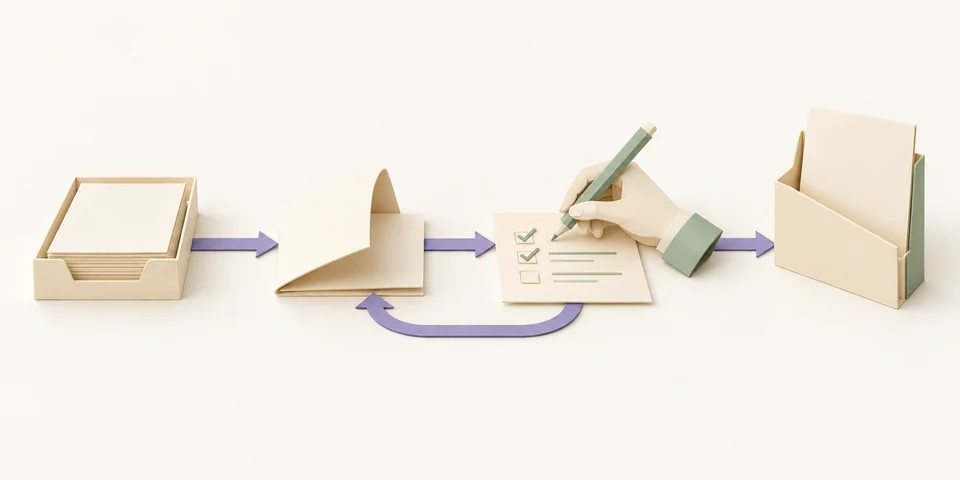
A useful pilot finishes a real path: receive the input, prepare the work, review it, record the result and handle an exception. That tells you more than an impressive isolated AI response.
Read the guide to agents, automation and custom software if you are unsure which parts of the workflow need which technology. You may need a small connection, a helpful interface or a clearer rule before you need an agent.
Bring a real example.
Bring one recent brief, report or onboarding handoff. We can map the useful change, the human review point and a sensible first test.
Let’s talk